
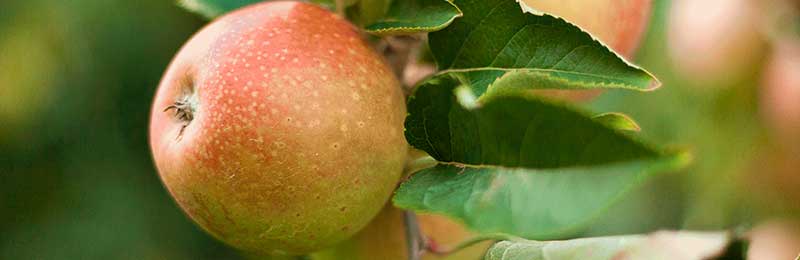
About Apple Trees
Apple trees are long-lived, deciduous fruit trees prized for fragrant spring blossoms and abundant fall harvests. Their versatile fruit is delicious fresh or used for baking, cider, applesauce, preserves, drying, and storage.
Apple trees are typically grafted, combining the desired fruiting variety with a rootstock that influences mature size, cold tolerance, soil adaptation, and other growth characteristics. Most apple varieties also require cross-pollination with a different compatible apple variety for dependable fruit production, making a suitable pollinating partner an important part of planning your orchard.
What to Do When Your Apple Tree Arrives
Open the shipping box promptly and carefully remove the plant and packing materials, handling it by the container or root area rather than the canes. Inspect the plant; minor bent leaves, broken tips, or leaf drop can occur during shipping and are not necessarily signs of poor health.
Apple trees are deciduous, so plants shipped from late fall through early spring dormant with bare branches and tightly closed buds. A tree shipped later in the growing season may arrive fully leafed out. Both appearances can be normal.
Check the soil before watering. If it feels dry about one inch below the surface, water thoroughly; if moist, allow it to drain and wait to water.
Place actively growing trees in a bright, sheltered outdoor location and gradually introduce them to full sun over about one week. Plant as soon as practical, avoiding frozen or saturated soil. If planting is delayed, keep the roots protected and the soil evenly moist.
When to Plant Apple Trees
Late winter through early spring is generally the best time to plant apple trees. Plant dormant trees as soon as the ground has thawed and is workable, or wait until severe frost danger has passed for actively growing trees.
Fall planting can also be successful in mild climates when trees have time to establish before the ground freezes. Avoid planting during extreme heat, hard freezes, drought, or when soil is saturated.
Where to Plant Apple Trees
Choose a full sun location with good air circulation and well-drained soil. Avoid low areas where water or cold air collects, as poor drainage can damage roots and frost pockets can injure spring blossoms. A gentle slope is ideal for allowing cold air to drain away.
Allow plenty of room for the mature canopy and roots, keeping trees away from buildings, power lines, septic fields, pavement, and large established trees. Maintain an open, mulched area around the trunk to reduce competition from grass and protect the tree from mower and trimmer damage.
Climate and Growing-Season Considerations
Apple varieties differ in cold hardiness, winter-chill needs, and the amount of summer warmth required to mature their fruit.
Honeycrisp is especially well adapted to colder apple-growing regions. Gala also ripens relatively early, making it suitable for many regions with moderate growing seasons.
Fuji and Granny Smith ripen considerably later. In areas with short summers or early autumn freezes, the fruit may fail to develop its full sweetness and flavor before cold weather arrives. Utah State notes that Granny Smith may ripen too late even in some otherwise suitable apple-growing locations.
How to Plant Apple Trees
Dig a hole two to three times wider than the root ball but no deeper. Remove the tree carefully, loosen circling roots, and trim any damaged or girdling roots. Position the tree with the root flare level with or slightly above the soil and the graft union clearly above ground.
Backfill with the original soil, firm gently, and water thoroughly. Apply 2–3 inches of organic mulch over the root zone, keeping it several inches away from the trunk to prevent excess moisture, decay, and disease.
How to Care for Apple Trees
Watering
Newly planted apple trees need consistent moisture while their roots establish. Water slowly and deeply when the root zone begins to dry, often about once a week during warm, dry weather, adjusting for rainfall, soil type, and temperature. Thoroughly moisten the root ball and surrounding soil rather than watering lightly and frequently. Established trees tolerate brief dry periods, but consistent moisture is especially important during flowering and fruit development. Avoid both prolonged drought and saturated soil. Honeycrisp™ is particularly sensitive to uneven moisture, which can contribute to bitter pit and other fruit-quality problems.
Fertilizing
Newly planted trees generally do not need immediate fertilization. Once established, apply compost or a balanced fruit-tree fertilizer in early spring if needed, following package directions. A soil test is the best way to identify specific nutrient needs. Avoid excessive or late-season nitrogen, which can encourage overly vigorous growth, reduce fruit quality, and increase susceptibility to certain problems. If foliage yellows or growth appears weak, check soil moisture, drainage, pH, and root health before assuming fertilizer is needed.
Pruning
Complete most pruning in late winter after the coldest weather has passed but before spring growth begins. Remove dead, damaged, diseased, crossing, or rubbing branches, along with rootstock suckers below the graft and vigorous upright water sprouts. Maintain a central leader with well-spaced scaffold branches, thinning crowded growth to improve sunlight and airflow.
Avoid removing too much healthy wood at once, as heavy pruning can stimulate excessive growth and delay fruiting. Light summer pruning can control water sprouts if needed, but never indiscriminately top an apple tree, which encourages weak, difficult-to-manage growth.
Winter Care
If fall has been unusually dry, water thoroughly before the ground freezes and maintain mulch over the root zone, keeping it away from the trunk. Protect young trees from rabbits, voles, deer, and winter sun damage with appropriate guards or tree wraps.
Avoid fall pruning, which can leave fresh wounds vulnerable to winter injury. Wait until late winter to prune, when cold-damaged wood is easier to identify.