
If you grow edible flowers, herbs, and beets, this salad is what they were made for.
We partnered with Erin Torgerson — farmer, chef, and the person behind Slow Talkin’ Farm in Efland, North Carolina — to grow a seasonal salad from seed to plate. The result is the product of a cooking philosophy she calls “Blank Canvas”: a recipe built on a simple framework that adapts to whatever is ready in the garden.
Here’s how she made it, and how you can grow the ingredients yourself.
Who Is Erin Torgerson?
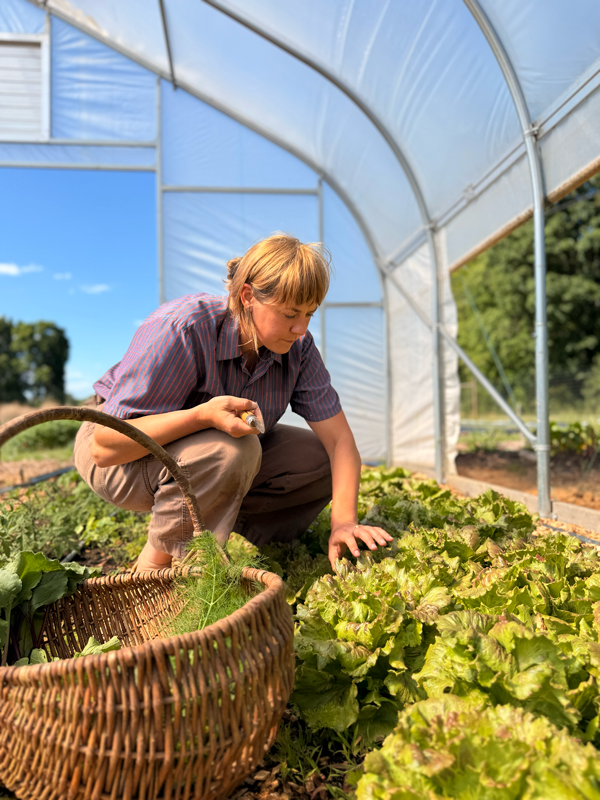
Erin runs Slow Talkin’ Farm in Efland, NC, where she hosts seasonal dinners and cooking classes. She studied at the University of Gastronomic Sciences in Pollenzo, Italy (the institution founded by the Slow Food movement), and her cooking is rooted in that tradition — seasonal, place-based food that draws from the land and the people who tend it.
We partnered with Erin because she’s doing exactly the kind of work we care about: growing food thoughtfully, teaching people to cook with it, and doing it right here in North Carolina where we’re based. Through partnerships like these, we’re able to celebrate the full journey from seed to harvest, and the many ways flowers, herbs, and vegetables can nourish both the table and everyday life.
What Is the “Blank Canvas” Approach to Cooking?
“‘Blank Canvas’ is my whole philosophy for cooking — once you understand the base of a recipe, everything you add after that becomes your colors and textures, adaptable to what’s growing in the garden and turning a simple dish into something really playful.” — Erin Torgerson
In practice, this means the recipe gives you a foundation of varied textures and flavors — peppery greens, crisp beets, edible flowers, a bold herb dressing — and you fill it in with what you have. Radishes instead of beets. Spinach or mizuna to replace lettuce or arugula. Different flowers depending on the week. The base stays the same; the rest is seasonal.
It’s a useful framework for seasonal meal planning — especially when harvests come in full force and you’re trying to find easy ways to use it all.
The Salad: What to Grow
Greens and Beets
- Wild Arugula (Organic) — more peppery and slightly smaller-leafed than standard arugula. Holds up well under dressing without wilting immediately.
- Black Seeded Simpson Lettuce — a soft, loose-leaf variety that balances the arugula’s bite. Erin uses both together as the base.
- Chioggia Beets — the candy-striped variety. The rings fade a little when roasted but the flavor is mild and sweet, less earthy than a standard red beet.
- Cylindra Beets — Erin’s preference for this salad. “Cylindra beets are a favorite of mine — their oblong shape gives you more surface area for nice, even slices.”
- Cherry Belle Radishes — fast-growing, crisp, and colorful. Good in place of beets if you don’t have them ready yet.
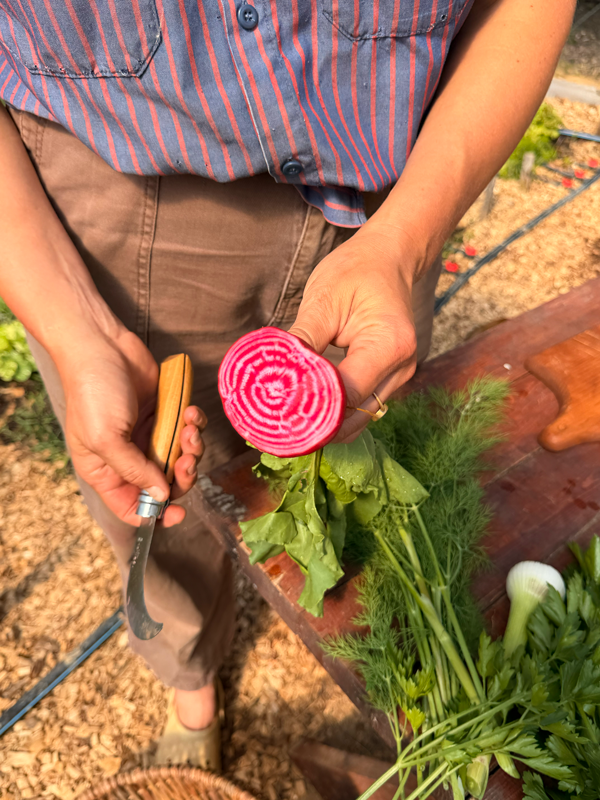
Edible Flowers
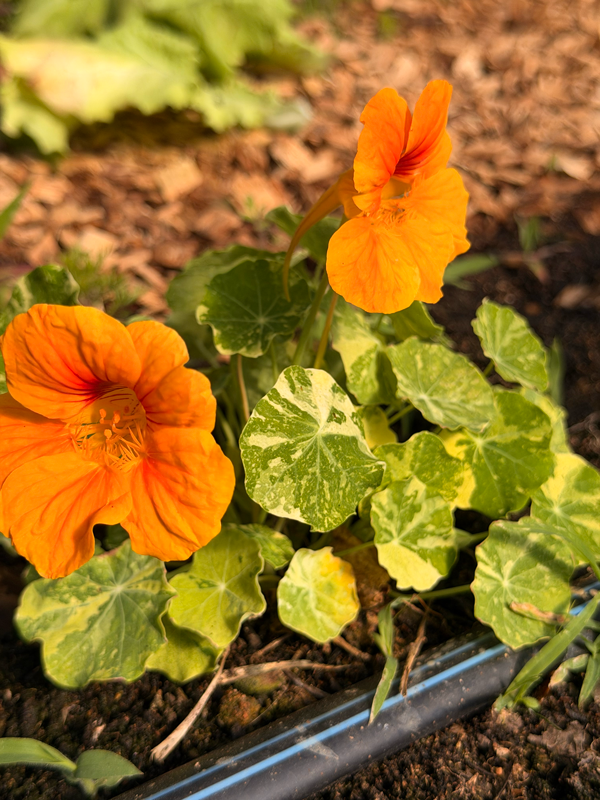
- Nasturtium – Alaska Mix — variegated foliage, peppery flavor. Both the flowers and leaves are edible, and they’re one of the most productive edible flowers you can grow. The more you cut, the more they produce.
- Viola – Brush Strokes — small, delicate blooms in mixed colors. They don’t add much flavor, but visually they do a lot of work in a salad like this.
“Don’t be shy with your edible flowers — the more you snip, the more you encourage the plant to keep producing blooms.” — Erin Torgerson
Erin’s Plating Tip
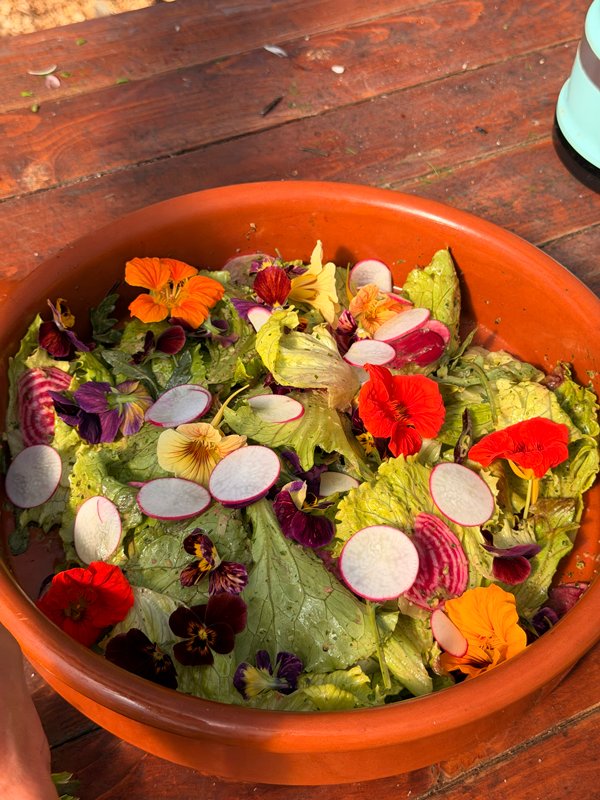
“When I’m dressing a salad, I save a handful of the colorful bits — flowers, radishes, beets — to tuck in and scatter on top. That way the vibrant colors stay visible instead of getting lost in the greens or settling to the bottom.” — Erin Torgerson
Green Goddess Dressing Recipe
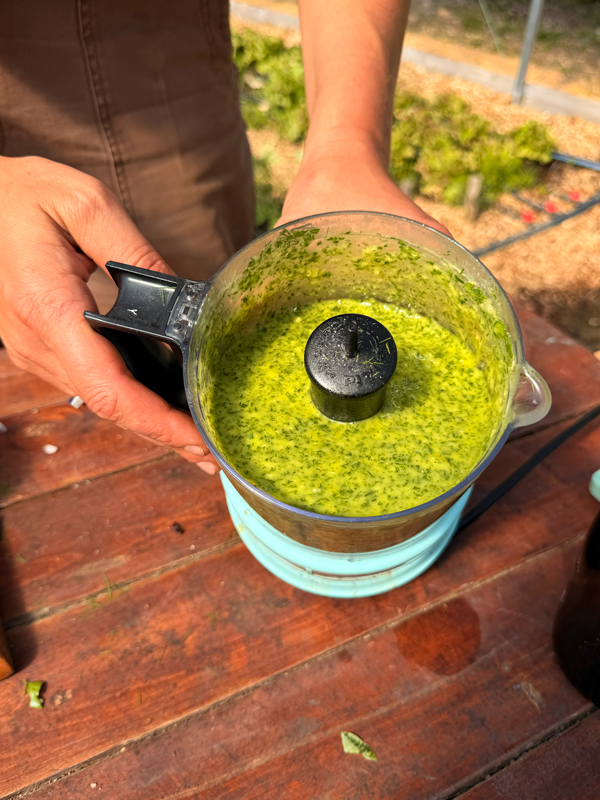
This dressing is what ties the salad together. It’s herb-heavy, slightly tangy, creamy without dairy, and bright green. You’ll need a blender or food processor.
Ingredients
| Ingredient | Amount |
| Italian Parsley (Organic) | Large handful, roughly chopped |
| Dill – Bouquet (Organic) | Large handful, roughly chopped |
| Cilantro (Organic) | Large handful, roughly chopped |
| California Early Garlic | 2 cloves |
| Lemon | 1 whole, roughly chopped |
| Dijon mustard | 1 tablespoon |
| Anchovy paste | 2 teaspoons |
| Honey | 2 teaspoons |
| Cracked black pepper | 1 teaspoon, or to taste |
| Salt | 1 teaspoon, or to taste |
| Olive oil | ¾ cup |
| Water | 2 tablespoons |
Directions
- Roughly chop the herbs, garlic, and lemon. Add them all to the blender.
- Add the dijon, anchovy paste, and honey. Season with salt and pepper.
- Pour in the olive oil and water. Blend until smooth and bright green.
- If it’s too thick, add more olive oil or water a little at a time and blend again.
- Taste and adjust. Add more honey if it needs sweetness, more lemon or salt if it needs a lift.
The dressing keeps in the fridge for about a week and works on grain bowls, roasted vegetables, and sandwiches just as well as it does on this salad.
How to Grow These Ingredients
All of the varieties Erin used — and the substitutes — are available on our site. Most are straightforward to grow, even in a small garden or raised bed.
Quick growing notes:
- Beets do best direct-sown in early spring or fall. Chioggia and Cylindra both mature in about 55–60 days.
- Arugula is fast — 30–40 days from seed — and bolts in heat, so plant early or in partial shade.
- Nasturtiums prefer poor, well-drained soil. Too much nitrogen and you get lots of leaves, fewer flowers.
- Violas are cool-season flowers. Start them indoors 8–10 weeks before your last frost date or direct sow in fall.
- Parsley, dill, and cilantro can all be started from seed and grown together in a dedicated herb bed or containers.
About This Partnership
Our farm partnerships are rooted in a shared commitment to understanding and documenting the full journey from seed to harvest. Working closely with growers gives us real-time feedback on how our varieties perform in the field while also allowing us to tell the story of how food moves from seed to table (or vase).
We partnered with Erin because of her thoughtful approach to natural farming practices, her deep connection to seasonal food, and her passion for building community through agriculture. Supporting the next generation of farmers is especially important to us, and we’re proud to collaborate with someone growing and gathering right here in North Carolina, where we call home.
If you want to follow Erin’s work, she’s on Instagram at @slowtalkinfarm and at slowtalkinfarm.com.
Frequently Asked Questions
What edible flowers can you put in a salad? Nasturtiums, violas, borage, calendula, and chive blossoms are all good options. For this salad, nasturtiums and violas work best — nasturtiums add a peppery bite, violas are mild and mostly visual.
Can you eat Chioggia beets raw? Yes. Raw Chioggia beets are firm and mildly sweet. Slice them thin on a mandoline for a salad, or roast them for a softer texture and slightly deeper flavor. The striped rings are more visible raw — they fade a bit with heat.
What herbs go in green goddess dressing? Traditional green goddess uses parsley, tarragon, and chives. This version uses parsley, dill, and cilantro for a brighter, more garden-forward flavor. You can substitute basil or tarragon if that’s what you have growing.
How long does green goddess dressing last in the fridge? About 5–7 days in an airtight container. The color stays bright green if you store it properly. It may separate slightly — just stir or shake before using.