
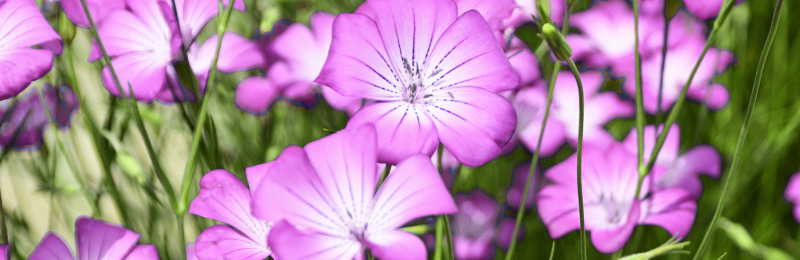
About Agrostemma
Agrostemma, Agrostemma githago, also known as Corn Cockle, is a charming old-fashioned cottage garden annual prized for its elegant, satiny blooms held atop slender stems that sway gracefully in the breeze. Once a common sight in European grain fields, Agrostemma has become a beloved ornamental flower known for its effortless beauty and naturalistic appeal.
While admired for its beauty, all parts of Agrostemma/Corn Cockle are considered toxic if ingested by people or animals. Care should be taken when planting around pets, livestock, and small children.
When to Plant Agrostemma Seeds
Agrostemma prefers cool-season growing conditions and can be planted either in early spring or fall, depending on your climate.
In colder regions, sow seeds outdoors as soon as the soil can be worked in spring. The seedlings tolerate light frosts and establish best during cool weather.
In areas with mild winters, fall sowing is often preferred. Seeds naturally overwinter and develop stronger root systems, resulting in earlier blooms the following season.
Where to Plant Agrostemma Seeds
Choose a location that receives full sun, with at least six to eight hours of direct sunlight each day. Plants grown in too much shade may become weak and produce fewer flowers. This plant prefers average, well-drained soil, adapting well to a variety of soil types as long as drainage is adequate.
Because of its upright habit and slender stems, Agrostemma can be woven naturally through mixed flower plantings to provide height and movement. Their airy habit lends itself well to borders, cutting gardens, meadow plantings, and informal landscapes where its open flowers can attract pollinators.
How to Plant Agrostemma Seeds
Agrostemma develops a taproot and is best direct sown rather than transplanted.
Sow seeds directly into prepared soil free of weeds and debris at a depth of approximately ¼ inch and gently firm the soil after planting. Keep the soil evenly moist during germination and while seedlings become established. Space seeds several inches apart and thin seedlings to 10 to 12 inches apart as they develop to allow adequate room for mature growth.
For indoor sowing, start seeds in biodegradable pots to minimize root disturbance during transplanting. Seeds typically germinate within 7 to 14 days when soil temperatures remain between 55°F and 65°F.
How to Care for Agrostemma
Once mature, Agrostemma demonstrates moderate drought tolerance and generally requires only supplemental watering during prolonged dry periods. Deep, infrequent watering is preferred over frequent shallow applications. Avoid consistently wet conditions, as overly saturated soil can contribute to root problems and weakened plants.
Deadheading spent flowers may extend the blooming period and encourage continued flower production. However, allowing some flowers to mature and set seed may encourage natural reseeding in favorable conditions.
In exposed locations, taller plants may benefit from neighboring support plants or discreet staking to prevent lodging after heavy rain or wind.
The delicate blooms make excellent cut flowers and can be harvested regularly without harming overall plant performance.