
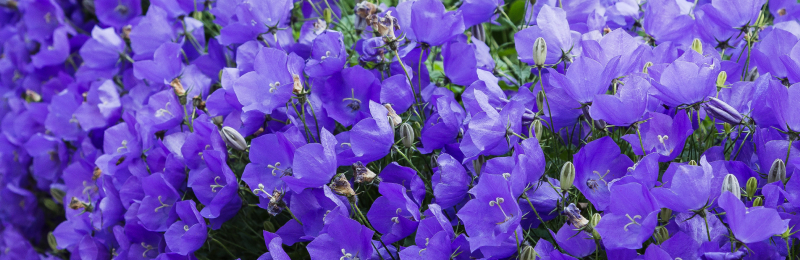
About Bellflower
Tussock Bellflower, Campanula carpatica, also known as Carpathian Bellflower, is a charming low-growing perennial prized for its tidy rounded habit, cheerful bell-shaped blooms, and easy garden versatility. Its compact mounds of green foliage become covered with blue to purple flowers, creating a soft look in borders, rock gardens, containers, between stones, or in mixed containers where it can spill gently without overpowering nearby plants.
When to Plant Bellflower Seeds
Fall sowing is also a good option, especially for gardeners who prefer to let outdoor winter conditions naturally prepare the seeds for germination. Sow seeds after temperatures have cooled, allowing them to overwinter and sprout when conditions are favorable in the spring.
For spring planting, seeds may be started indoors several weeks before the last frost or sown outdoors after the danger of hard frost has passed. For best germination, seeds benefit from a period of cold moist stratification approximately four weeks before spring sowing.
Tussock Bellflower performs best in cool to moderate growing conditions. In hot climates, spring planting with afternoon shade can help young plants establish before summer heat arrives.
Where to Plant Bellflower Seeds
In cooler regions, plants grow well in full sun. In warmer climates, light afternoon shade can help protect plants from heat stress and keep foliage looking fresh.
Tussock Bellflower prefers open sites with good airflow and well-drained soil. Because of its compact, mounding habit, this plant works especially well where gardeners want color without height. Use it along pathways, near garden walls, in patio containers, or tucked around taller perennials as a bright flowering accent.
How to Plant Bellflower Seeds
If planting in the spring, provide four weeks of cold moist stratification, then sow seeds about 1/8 inch deep into a quality well-draining potting mix (for containers) or loosened weed- grass- and debris-free soil. Because the seeds need light to germinate, press them gently into the soil surface and dust with a thin layer of fine soil. Keep the seedbed evenly moist during germination. Seeds typically germinate in about 14 to 21 days under favorable conditions.
Once seedlings are large enough to handle, thin or transplant them to about 9 to 12 inches apart. This spacing gives mature plants room to form full, rounded mounds while maintaining good airflow. Keep soil evenly moist while seeds germinate and young seedlings establish.
How to Care for Bellflower
Once mature, Tussock Bellflower prefers average moisture. Water during dry spells, especially when plants are blooming or growing in containers. Avoid allowing container-grown plants to dry out completely during hot weather. Avoid over-fertilizing, especially with high-nitrogen fertilizer, which can encourage leafy growth at the expense of flowers.
Keep young plants weeded during the first season so they do not have to compete for light, moisture, and nutrients. Deadhead spent flowers to encourage additional blooming and keep plants looking tidy. Regular deadheading can extend the flowering period and help maintain a fresh appearance through the season.
After the main bloom period, lightly trim plants if foliage becomes tired or open. In colder regions, a light winter mulch can help protect the root zone, but avoid covering the crown too heavily.
Older clumps may be divided every few years if they become crowded or lose vigor.