
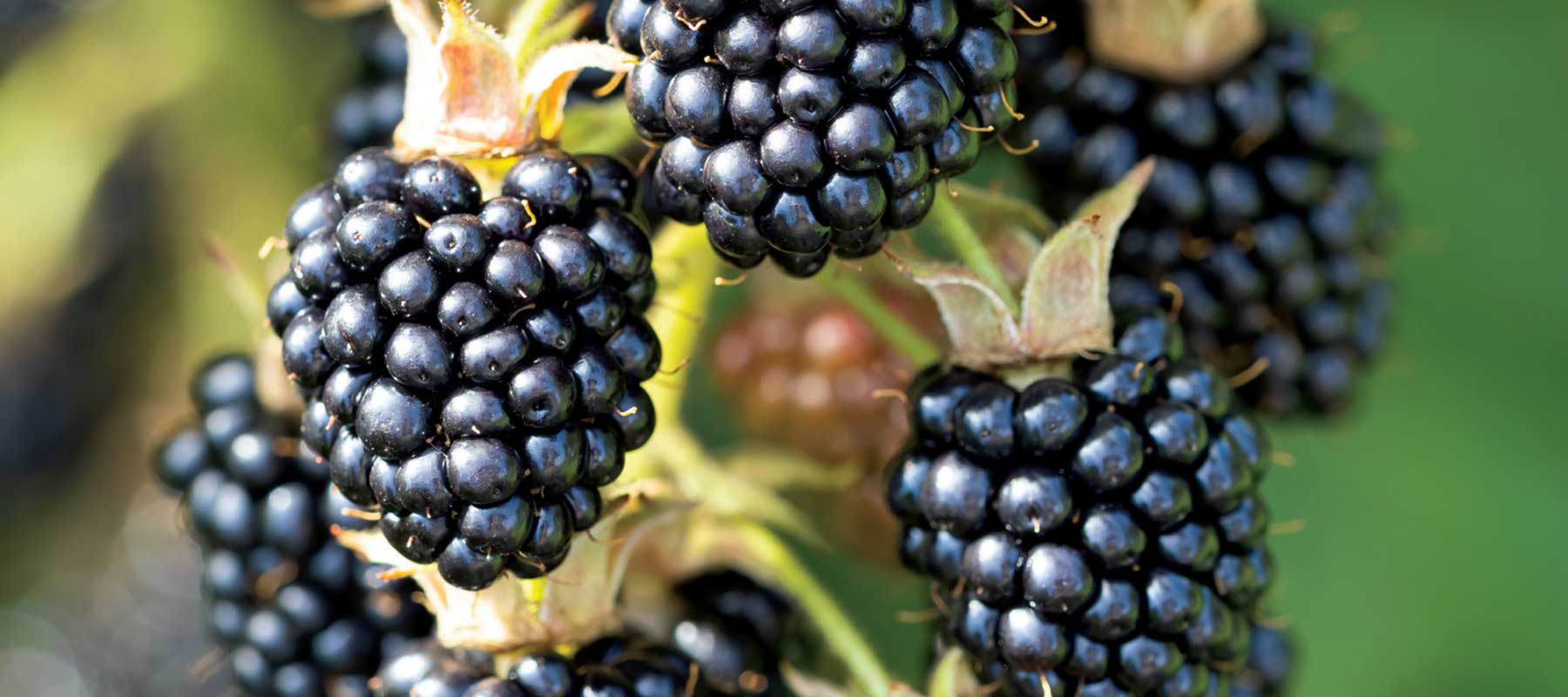
About Blackberries
Blackberries are perennial plants that produce new canes from their crown and roots each year. For our summer-bearing varieties, fruit is produced on second-year canes called floricanes, while new first-year canes grow to provide the following year’s crop.
Few things compare to the sweet, juicy flavor of blackberries picked fresh from your own garden. Our thornless blackberry varieties make harvesting even more enjoyable, with no prickly thorns to get in the way—perfect for families and little garden helpers. Delicious eaten right off the plant or added to desserts, jams, smoothies, and more, blackberries are also naturally rich in fiber, vitamins, and antioxidants, making them a fun and nutritious crop the whole family can enjoy.
What to Do When Your Blackberry Roots Arrive
Our blackberry roots arrive dormant or just beginning to emerge from dormancy. This is normal and allows the plants to establish directly in their new growing location.
Open your box promptly and carefully remove your blackberry roots. Your roots will arrive packaged in a bag of soil to help protect them and maintain moisture during shipping. Do not remove the roots from the soil or open the bag until you are ready to plant. Keep the bagged roots cool and moist, and protect them from direct sunlight, heat, and freezing temperatures. Plant as soon as possible once the soil can be worked.
When to Plant Blackberry Roots
Plant blackberry roots in early spring, as soon as the soil has warmed and can be worked. Avoid planting when the ground is frozen, waterlogged, or excessively muddy.
Where to Plant Blackberry Roots
Choose a location in full sun with good air circulation and well-drained soil. Blackberries can grow in many soil types as long as drainage is good, but they perform best in fertile soil with plenty of organic matter and a pH between 6.0 and 7.0.
Before planting, remove weeds and work organic matter into the planting area. Space plants at least four feet apart, with approximately eight feet between rows. Trellising is beneficial for supporting long canes and keeping the planting easier to manage and harvest.
How to Plant Blackberry Roots
Before planting, soak the roots in water for one to two hours to help rehydrate them, but avoid soaking them for an extended period.
Keep the roots moist while preparing the planting area. Dig a hole wide and deep enough to accommodate the roots naturally without bending, bunching, or circling them.
Position the plant with the crown,the point where the roots meet the stem, approximately one to two inches below the soil surface. Spread the roots out in the hole, backfill with soil, and gently firm the soil around the roots to eliminate large air pockets. Water thoroughly after planting.
Trim back existing canes after planting to encourage vigorous new growth. Apply mulch around the plants to conserve soil moisture and suppress weeds, keeping the mulch slightly away from the crown and canes.
How to Care for Blackberries
Keep newly planted blackberries consistently moist while their root systems become established, but avoid keeping the soil saturated. Once established, provide regular water during dry periods, particularly during flowering and fruit development.
Fertilize at planting and again in late spring, following the fertilizer label for application rates. Maintain a layer of mulch to help conserve moisture and reduce weeds. Remove suckers that emerge outside the desired row so the blackberry patch does not spread beyond its allotted space.
Established, properly tipped canes are generally capable of remaining upright without the need for a trellis. However, light support can be helpful during the first few seasons, in windy locations, or when a heavy crop causes fruiting laterals to lean.
Blackberries can occasionally experience diseases such as anthracnose, Botrytis fruit rot, cane blight, and Verticillium wilt, while cane and crown borers are potential insect pests. Good air circulation, appropriate spacing, sanitation, and avoiding prolonged wet conditions around the plants can help reduce disease problems.
Understanding Blackberry Canes
The roots and crown of a blackberry plant are perennial, but each cane normally follows a two-year life cycle.
A primocane is a first-year cane. It emerges from the crown or roots during spring and is usually green, flexible, and vigorous. These new green canes must be preserved because they will become the following year’s fruiting canes.
After surviving winter, that same cane becomes a floricane. Floricanes produce flowers and berries during their second growing season and then die.
Our Thornless Blackberry is a floricane-fruiting cultivar. Do not cut all canes to the ground in winter. Cutting every cane to the ground during winter would remove the following summer’s crop.
How to Harvest and Prune your Blackberry Plant
On established plants, tip vigorous new primocanes during early summer when they reach approximately 40 to 42 inches tall. Remove only the soft growing tip. Tipping limits excessive height and encourages the cane to produce strong side branches that will carry the following year’s flowers and berries. The plant may produce new shoots at different times, so tipping may need to be repeated as individual canes reach the desired height.
The fruit ripens early in the blackberry season, often beginning in early June in warmer regions. A ripe berry should release from the plant with a gentle pull. If it resists, leave it for another day. After harvest, remove the floricanes that produced fruit. Cut them close to the ground and take them out of the planting. They can usually be identified by their browner or grayish bark, old fruiting stems, and declining foliage.
Do not remove the new green or burgundy primocanes. Those will hold the following year’s crop.
Shorten long side branches by approximately one-third to one-half. The goal is a manageable, open plant with strong fruiting wood rather than an exact measurement on every branch.
Thin crowded growth so sunlight and air can move through the planting. A smaller number of strong, well-positioned canes generally produces better fruit than a dense mass of weak shoots. Successful growth depends on pruning the plant to five to six canes, along with training new canes to stand erect.
Continue this pruning cycle each year, removing the canes that have finished fruiting while preserving healthy new canes for the next season’s crop.