
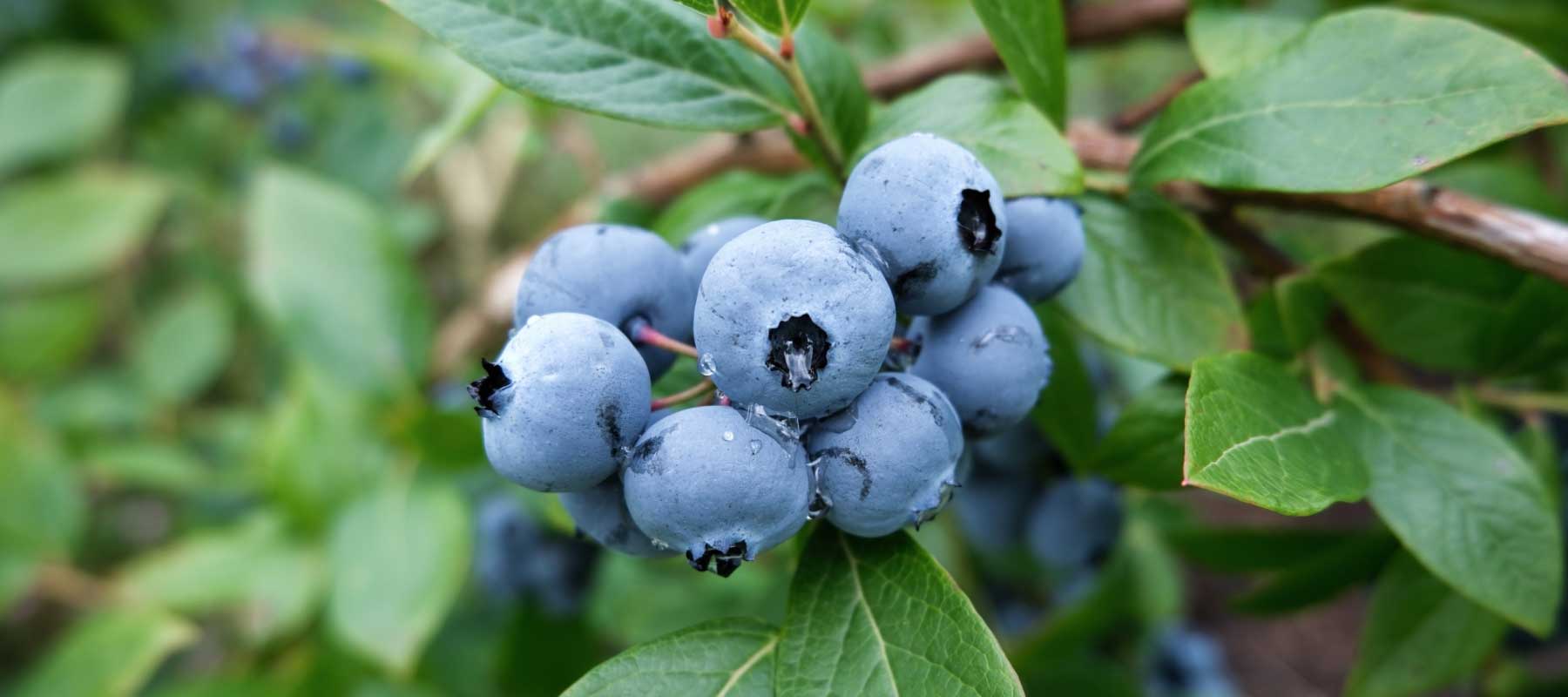
About Blueberries
There’s something special about stepping into the garden and picking a handful of ripe blueberries straight from the bush. Sweet, juicy, and packed with bright berry flavor, homegrown blueberries are delicious eaten fresh, sprinkled over breakfast, baked into muffins and pies, or preserved for later. The attractive shrubs also bring multi-season beauty to the landscape, with spring flowers, colorful summer fruit, and vibrant fall foliage. With the right soil and care, blueberry plants can reward you with delicious harvests for many years.
What to Do When Your Blueberry Roots Arrive
Open your shipping box promptly and inspect your blueberry roots upon arrival. The roots will be packaged in a bag of soil to help protect them and maintain moisture during shipping. Leave the roots in the soil and keep the bag closed until you are ready to plant. Keep the bagged roots cool and moist, protected from direct sunlight, heat, and freezing temperatures. Plant as soon as possible.
When to Plant Blueberry Roots
Plant blueberry roots in early spring as soon as the soil can be worked. In areas with mild winters, they can also be planted in fall, allowing time for the roots to begin establishing before cold weather arrives. Avoid planting when the ground is frozen, waterlogged, or excessively dry.
Container-grown bushes can technically be planted during much of the growing season, but planting during extreme summer heat requires considerably more attention to watering.
Where to Plant Blueberry Roots
Select a full sun location with good drainage and protection from strong, drying wind. Avoid heavy soil and low areas where water collects after rain.
Keep blueberry bushes away from trees and aggressive shrubs whose roots will compete for moisture. Blueberries have shallow, delicate roots and do not compete well against established woody plants or dense turf.
A raised bed or pot is often the best option where the native soil is heavy, alkaline, compacted, or difficult to amend. Raised beds allow gardeners to create the loose, acidic root environment blueberries require.
Soil Preparation for Blueberry Roots
Before planting, test the soil. We know that you are excited and ready to plant your roots, but adjusting the soil is much easier before the roots are in place, than trying to adjust your soil around their tender roots.
Your soil must test with a pH between 4.5 to 5.5 before planting your blueberry roots.
Option 1: Adding elemental sulfur to the soil. Elemental sulfur can be used to lower soil pH, but the appropriate amount depends on the starting pH and soil type. Follow the soil-test recommendation and product label rather than applying a generous handful and hoping the blueberries appreciate the enthusiasm. Sulfur works gradually and is best incorporated several months before planting. Preparing the bed during fall for planting the following spring is often the smoothest approach, but not convenient for people who have purchased plants in the fall and are ready to plant them.
Lowering the pH of heavy clay can be difficult, making a raised bed or container a better long-term solution in some locations.
Option 2: Add sphagnum peat moss to existing soil and plant. If using sphagnum peat moss, mix it thoroughly through the planting area rather than leaving it as a separate layer. Peat lowers pH and improves water retention, but gardeners may choose bark-based alternatives due to environmental concerns associated with peat harvesting. Using peat moss also allows you to plant that same season.
Soil Acidity is the Most Important Requirement for Successfully Growing Blueberries
Blueberries perform best in strongly acidic soil with a pH between approximately 4.5 and 5.5. Soil that is less acidic than pH 5.5 (for example, 6.0 and higher) can prevent the roots from absorbing iron and other nutrients, even when those nutrients are present in the ground. Typical symptoms of high soil pH include yellow leaves with green veins, weak growth, small leaves, reduced flowering, and poor fruit production.
Low-pH organic materials such as aged pine bark, fine bark, or suitable sawdust can improve aeration and organic matter. Avoid large amounts of manure, mushroom compost, or high-pH landscape compost, which may raise pH or expose young blueberry roots to excessive salts.
How to Plant Blueberry Roots
When you are ready to plant, carefully remove the blueberry roots from its packaging and gently loosen any tightly packed or circling roots.
Dig a hole approximately twice as wide as the root system and deep enough to accommodate the roots without crowding them. Position the plant so the top of the root system is level with or slightly above the surrounding soil. Spread the roots outward naturally and backfill, gently firming the soil as you go.
Water thoroughly after planting to settle the soil around the roots and eliminate large air pockets. Apply a two- to three-inch layer of acidic organic mulch, such as pine bark or pine needles, over the root zone to help conserve moisture, moderate soil temperature, and suppress weeds. Keep mulch slightly away from the base of the plant.
Growing Blueberries in Containers
Planting in a container or raised bed is a great option because you can create the perfectly acidic soil that is needed. Use a large container with several unobstructed drainage holes; a 15- to 20-gallon container or half-barrel-sized planter is appropriate for long-term growing.
Fill the container with an acidic, well-drained potting mix designed for blueberries, azaleas, rhododendrons, or other acid-loving plants. A suitable blend should contain a large proportion of aged fine bark with additional moisture-retentive material and perlite or pumice for drainage. Avoid mixes containing lime or large amounts of manure-based compost.
Position the crown of the roots approximately one to two inches below the soil surface. Spread the roots outward naturally and backfill, gently firming the soil as you go. Water thoroughly after planting and allow excess water to drain freely.
Container-grown blueberries require more frequent watering than plants growing in the ground. Their soil also loses nutrients and changes pH more quickly, so monitor moisture, growth, and soil acidity regularly.
In cold climates, protect container-grown roots during winter. Move the container to a sheltered location, or insulate the outside of the pot. Roots inside a container experience colder temperatures than roots protected by surrounding garden soil.
How to Care for Blueberries
Blueberry bushes can live and produce for decades when soil acidity, watering, pruning, and nutrition are properly managed. They grow slowly, however, and may require several years before reaching substantial production.
Keep the area free of weeds, hand-pulling them carefully as blueberry roots grow close to the soil surface and can be damaged by deep cultivation.
Provide approximately one to two inches of water per week deeply enough to moisten the full root zone, then allow excess water to drain. Frequent light sprinkling may leave the actual roots dry, while irregular watering can reduce berry size and cause flowers or developing fruit to drop. During flowering, fruit development, and hot summer weather, keep the root zone consistently moist. Drip irrigation or a soaker hose works particularly well.
Maintain a mulch layer of pine bark or pine needles to conserve moisture and keep the shallow roots cooler. Replenish mulch every spring as it decomposes, gradually maintaining a deeper layer around mature plants. Feed your bushes with an acid-loving fertilizer made for blueberries, camelias, or azaleas.
Do not cultivate deeply around the plants. Blueberry roots grow near the surface and are easily damaged by hoes, tillers, and aggressive digging.
Pruning Blueberry Bushes
Prune blueberry bushes while they are dormant, generally in late winter or early spring after the coldest weather has passed but before new growth begins. During the first few years, keep pruning limited to removing dead, damaged, weak, or badly positioned growth. The priority is building a healthy framework of strong canes.
As the bushes mature, remove some of the oldest, least productive canes at ground level to encourage vigorous replacement shoots. Blueberries produce fruit on one-year-old wood formed during the previous growing season. Avoid removing all of the healthy younger growth, or the following crop will be greatly reduced. Concentrate on removing thin, twiggy growth that produces small fruit and contributes little to the structure of the bush. Keep the center reasonably open so light and air can reach the fruiting branches.