
About Cherry Trees
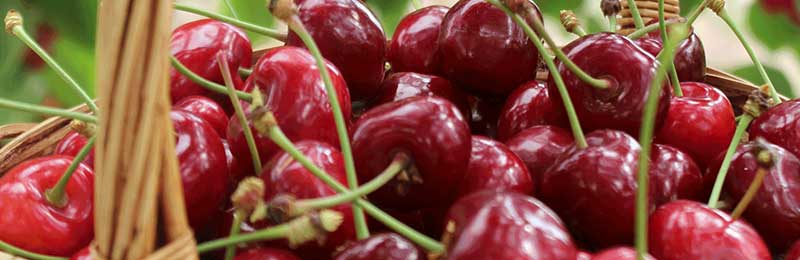
Sweet cherry trees combine showy spring flowers with glossy foliage and richly flavored summer fruit. Their cherries are best known for fresh eating, although they can also be frozen, dried, baked, preserved, or made into sauces and juice.
Cherry trees are normally grafted. The upper portion produces the named cherry variety, while the rootstock influences mature size, anchorage, soil tolerance, cold tolerance, disease susceptibility, and how soon the tree begins bearing. Trees of the same variety may therefore mature at very different sizes when grown on different rootstocks.
When to Plant Cherry Trees
Late winter through early spring is generally the best time to plant cherry trees. Plant dormant trees once the ground has thawed and is workable, or wait until severe freeze danger has passed for actively growing trees. Spring planting is especially recommended in colder climates, while fall planting can be successful in areas with mild winters. Avoid planting during extreme heat, drought, hard freezes, or when the soil is saturated.
Where to Plant Cherry Trees
Choose a full sun location with at least eight hours of direct sunlight for the best flowering, fruit quality, and harvest. Provide excellent drainage and good air circulation, as cherry roots are sensitive to waterlogged soil. Avoid low areas where water or cold air collects; a gentle slope can help protect early blossoms from late freezes.
Allow plenty of room for the mature canopy and access for pruning and harvesting. Some protection from strong winds is beneficial, but avoid enclosed areas with poor airflow or planting too close to buildings, pavement, septic systems, power lines, or large established trees.
How to Plant Cherry Trees
Sweet cherries grow best in deep, fertile, well-drained soil that is slightly acidic to neutral. Test the soil before planting and amend only as needed. Remove turf and perennial weeds, and incorporate a modest amount of finished compost throughout the planting area if organic matter is low.
Avoid adding fresh manure, concentrated fertilizer, or large amounts of compost or potting mix directly to the planting hole. In poorly drained sites, plant on a broad raised mound or berm, as cherry roots are highly susceptible to damage in saturated soil.
Dig a hole two to three times wider than the root ball but no deeper. Carefully remove the tree, loosen circling roots, and trim any damaged roots. Position the tree with the root flare level with or slightly above the soil and the graft union several inches above ground.
Backfill with the original soil, firm gently, and water thoroughly. Apply 2–3 inches of organic mulch over the root zone, keeping it several inches away from the trunk to prevent excess moisture, decay, and disease.
How to Care for Cherry Trees
Watering
Newly planted cherry trees need consistent moisture while their roots establish. Water slowly and deeply when the root zone begins to dry, often about once a week during warm, dry weather, adjusting for rainfall, soil, and temperature. Thoroughly moisten the root ball and surrounding soil rather than watering lightly and frequently.
Established trees need dependable moisture during flowering and fruit development. Avoid extreme swings between drought and heavy watering, which can contribute to fruit drop, small fruit, or cracking. Just as importantly, never keep the soil saturated, as cherry roots are highly susceptible to damage and rot in waterlogged conditions.
Fertilizing
Newly planted cherry trees generally do not need immediate fertilization. Allow the roots to establish and use a soil test to identify specific nutrient or pH needs. Established trees may benefit from a light application of balanced fruit-tree fertilizer or finished compost in early spring, following package directions.
Avoid excessive or late-season nitrogen, which can encourage weak, overly vigorous growth, delay fruiting, and increase susceptibility to winter injury and disease. If foliage becomes pale or yellow, check soil moisture, drainage, pH, pests, and root health before adding fertilizer.
Pruning
Prune cherry trees conservatively, removing dead, damaged, diseased, crossing, or crowded branches along with rootstock suckers. Thin as needed to improve sunlight and airflow, but preserve healthy fruiting spurs and avoid excessive pruning.
Because pruning wounds can invite disease, sweet cherries are often best pruned after harvest during a period of dry summer weather, particularly in regions with wet winters and springs. Use selective thinning cuts rather than heavy heading cuts, and remove unwanted branches while they are still small whenever possible.
Sweet cherries must ripen on the tree. They do not become sweeter after harvest.
Fruit should have developed its characteristic mature color, full flavor, and slight tenderness while remaining firm. Taste is one of the most reliable maturity tests.