
About Garlic
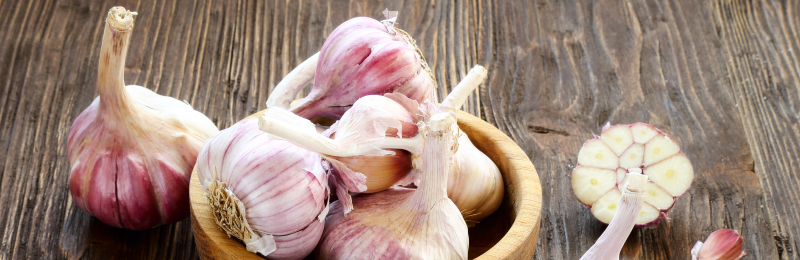
Garlic is grown from individual cloves, not true seeds. A “seed garlic bulb” is simply a mature bulb that is broken apart into cloves, with each clove growing into one new garlic bulb. In general, bigger, healthier cloves produce bigger bulbs, so starting quality matters. Insider tip: If you plant a small clove, it will create a small bulb filled with small cloves that are more difficult and time consuming to peel. Therefore, choose the largest cloves to plant and then plant the rest if you have the space.
But how many should you plant? Well, if you and your family eat a head of garlic a week, for example, then we suggest planting 60 to 70 cloves. Keep in mind that each bulb consists of five to ten cloves, so for this example, you will need to purchase 7 to 13 bulbs. We figure if you eat that much garlic, then you may have family and friends that do as well, and this will give you enough to store and share. Plus, you can save a few to plant the following fall!
There are several main garlic types. Hardneck garlic, such as Chesnok Red, is best suited to colder winter climates and produces an edible flower stalk called a scape. Hardnecks have fewer but larger cloves, are usually easier to peel, and tend to have shorter storage life than softnecks. Softneck garlic, like California Early, is the most adaptable type, performs well in mild-winter regions, usually does not produce scapes, stores the longest, and is ideal for braiding. Elephant garlic is not a true garlic but a close relative of leeks; it produces enormous cloves with a very mild flavor and is grown much like garlic, though it needs more space and sometimes more time to size up fully.
When to Plant Garlic Bulbs
Garlic is best planted in fall, allowing it to establish strong roots before winter sets in. A simple rule that works almost everywhere is to plant four to six weeks before the ground freezes hard or before consistent hard frosts arrive. The goal is to encourage root growth without triggering excessive top growth before winter.
Where to Plant Garlic Bulbs
Garlic performs best in full sun, with a minimum of six to eight hours of direct light per day. More sun results in larger bulbs and better drying conditions at harvest, while too much shade leads to smaller bulbs and slower curing.
Garlic prefers loose, fertile, well-drained soil rich in organic matter, with even moisture but no standing water. A pH range of about 6.0 to 7.0 is ideal. Avoid heavy clay soils unless amended, waterlogged areas, and fresh manure right before planting, which can increase disease pressure and overly aggressive growth.
Before planting, loosen the bed 8 to 10 inches deep, incorporate two to three inches of compost, and apply a balanced fertilizer if your soil test indicates a need. Rake the bed smooth so planting depth remains consistent across the row.
How to Plant Garlic Bulbs
Just before planting, ideally the same day, separate bulbs into individual cloves, keeping the papery skins intact and avoiding damage to the basal plate. The papery skins help protect the clove in the soil, so it is very important that they are not removed. Plant cloves two to three inches deep, measuring from the top of the clove to the soil surface. In colder climates or lighter soils, planting slightly deeper helps protect cloves over winter.
Space cloves four to six inches apart, with rows 12 to 24 inches apart to allow airflow, easier weeding, and harvesting. Always plant cloves pointed end up and basal plate down, then water deeply to settle soil around the cloves. Mulch with a three to six inch layer of clean straw, shredded leaves, or pine needles to suppress weeds and stabilize soil temperature and moisture.
Elephant garlic is planted similarly to standard garlic but requires greater depth and spacing due to its size. Plant cloves about four to six inches deep, spacing them 8 to 12 inches apart, with rows 18 to 30 inches apart. Giving elephant garlic extra room allows bulbs to reach their impressive full size.
Garlic responds strongly to fertility early in the season, particularly nitrogen, because bulb size depends on leaf growth. Compost and a balanced fertilizer at planting are often sufficient in fall. In early spring, when growth resumes, side-dress with a nitrogen source to encourage vigorous leaf development.
How to Care for Garlic
Watering Requirements
Garlic prefers consistent moisture during active growth but does not tolerate soggy soil. Aim for about one inch of water per week from rainfall and irrigation combined. In fall, water just enough to establish roots without keeping soil wet.
In spring, consistent moisture supports strong leaf growth, which directly influences bulb size. During bulb sizing in late spring and early summer, steady moisture remains important. In the final two to three weeks before harvest, reduce watering significantly to help bulbs dry down and cure properly.
Fertilizing Schedule
If soil is lean, light feedings every two to three weeks for a short window can be helpful. Once bulbing begins in late spring, ease off nitrogen. Too much late nitrogen produces lush tops, delays maturity, and reduces storage quality.
Harvesting Garlic
Garlic is ready when the lower leaves are brown and dry, while several upper leaves are still green. Waiting too long can cause wrappers to break down and bulbs to split, reducing storage potential. To harvest, loosen soil with a fork or broadfork and lift bulbs gently. Avoid pulling directly on the stalk.
Keep bulbs intact and unwashed, and cure them in a shaded, dry, well-ventilated area. Bulbs can be hung or spread in a single layer and should cure for two to four weeks, depending on humidity. After curing, trim roots. Cut hardneck stalks back to about one inch above the bulb, while softneck stalks can be left longer for braiding. Continue to store in a cool, dry, airy location, avoiding sealed containers and refrigeration, which can trigger sprouting.