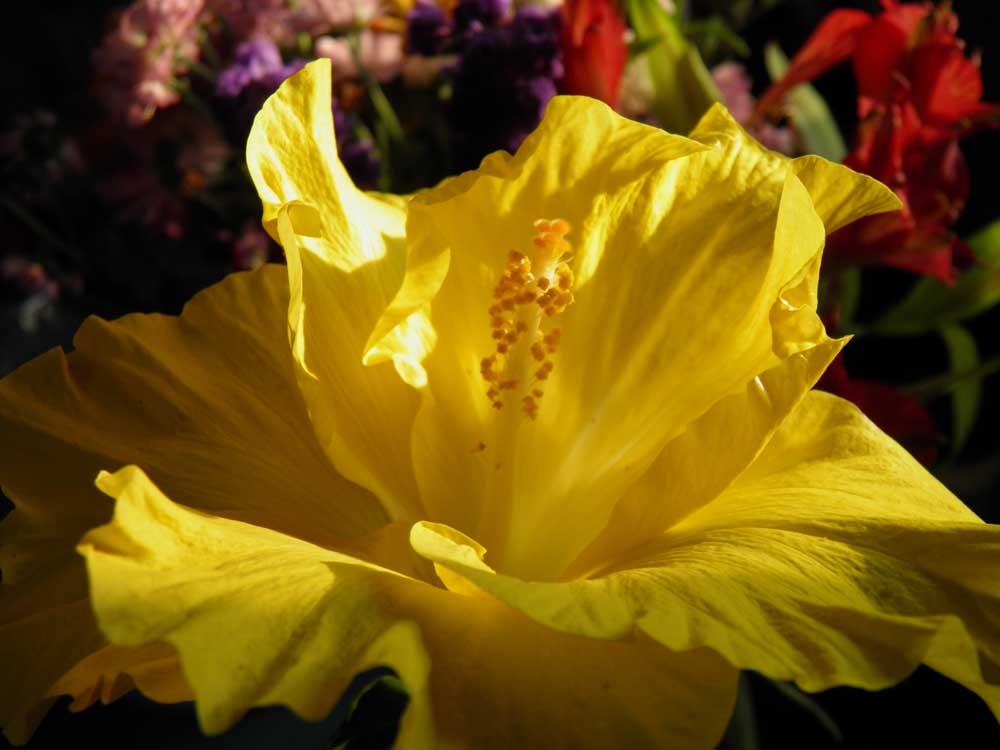
About Hibiscus
Hibiscus moscheutos is bred to give you big, tropical-looking flowers on compact, bushy plants without needing multiple seasons to bloom. Unlike tender tropical hibiscus, Hibiscus moscheutos is a true herbaceous perennial: it dies back to the ground in winter and returns from the crown each spring.
The flowers are the headline producing large, showy blooms, commonly six to eight inches across, in a mix of colors. Plants stay relatively compact, about 24 to 36 inches tall, which is why this variety is often recommended for containers and front-to-mid perennial borders.
This is also a hibiscus that’s comfortable in moist garden situations. It can be planted near ponds or water gardens, and once established it can also handle periods of dryness better than people expect for a “swamp hibiscus.”
When to Plant Hibiscus Seeds
Starting hibiscus from seed gives the best control and the most reliable results. Sow seeds indoors in spring, about eight to ten weeks before your last expected frost, so the plants are ready to transplant outdoors once nights are consistently mild.
Where to Plant Hibiscus Seeds
Hibiscus grows best in full sun, which supports strong stems and the heaviest bloom production. It performs best in rich soil that holds moisture well while still maintaining some structure, rather than soil that stays stagnant or sour. Think of a garden soil that remains evenly damp, especially through the heat of summer. HIbiscus is well suited to rain-garden edges, low spots that stay evenly moist, and pond or water-garden margins. It can also be grown successfully in larger patio containers, which is one of the biggest advantages of the Luna series.
How to Plant Hibiscus Seeds
Because hibiscus seeds can have firm seed coats, many growers improve germination by lightly scarifying the seeds with a gentle nick or a rub with sandpaper, and by soaking them in room temperature water for about eight hours before sowing. Sow seeds indoors at warm temperatures, ¼ inch deep, ideally around 68°F to 75°F, and keep the seed-starting mix evenly moist but not soggy. Once the danger of frost has passed, transplant seedlings outdoors after hardening them off. Space plants 24 to 36 inches apart.
How to Care for Hibiscus
Keep the soil consistently moist while plants are establishing and during hot weather, since this is not a dry-border perennial when young. Regular watering and feeding with an all-purpose fertilizer will give the best results, especially for plants grown in containers. A layer of mulch is helpful for maintaining even soil moisture and reducing weed competition, which is especially beneficial because hibiscus crowns prefer steady growing conditions. Luna is also known as a first-year flowering perennial when started from seed and grown well with a long enough season.
After frost, the stems die back, and the dead growth can be cut back while leaving the crown in place to return from the base the following spring. Hardy hibiscus is often slow to emerge in spring compared to many other perennials, so do not assume the plant is gone too early, give it time once the soil warms.