
About Horseradish
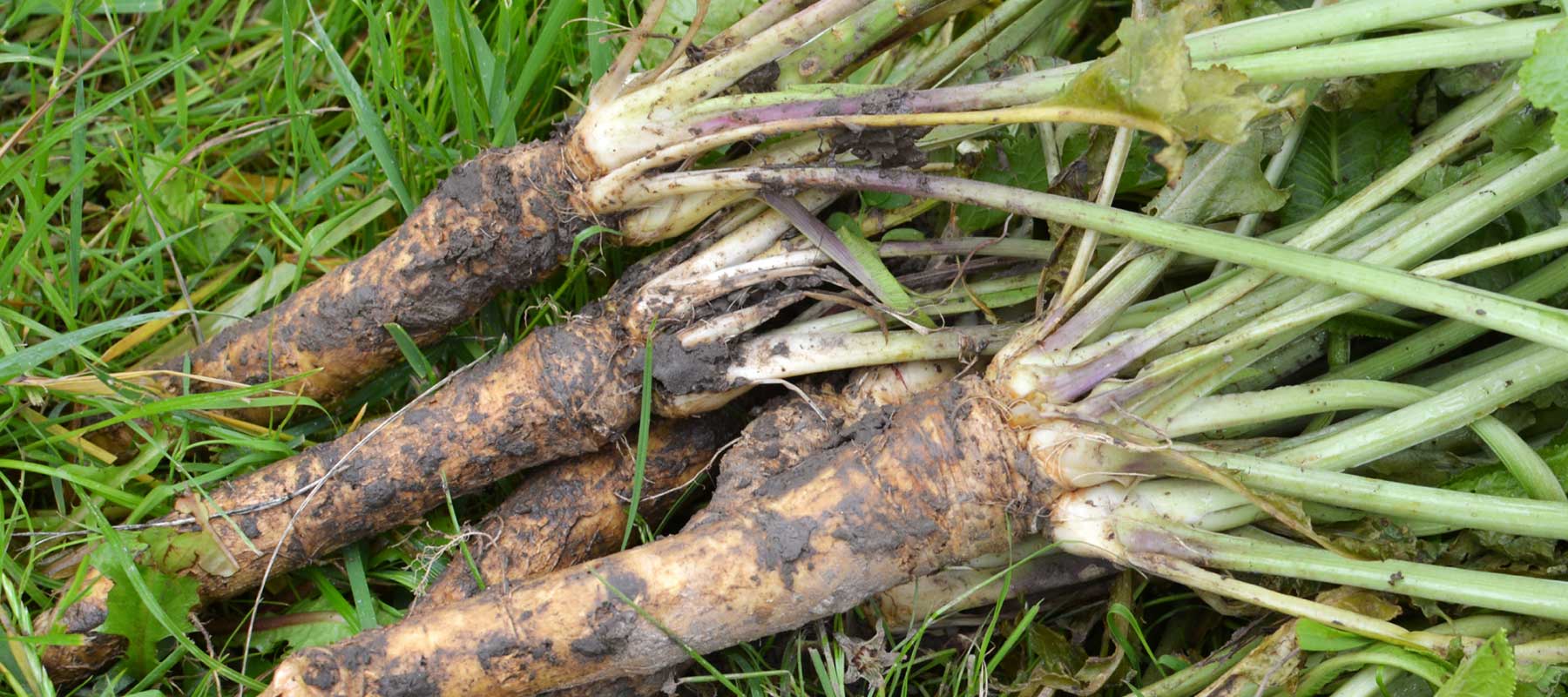
Horseradish (Armoracia rusticana) is a hardy perennial vegetable grown for its thick, pungent roots. Freshly grated roots provide the distinctive heat used in sauces, marinades, meat and seafood dishes, and preserves.
Horseradish sets are root cuttings, not seeds or established crowns. Planted in spring, each set develops into a vigorous plant with large, wavy foliage and an extensive root system. Because horseradish can regrow from small root pieces left in the soil, choose its permanent location carefully.
When to Plant Horseradish Sets
Plant soon after arrival, keeping the root cuttings cool and moist if planting must be briefly delayed.
Plant Horseradish Sets in early spring once the soil can be worked and has warmed to about 50°F. Early planting gives roots plenty of time to establish before their strongest growth in late summer and fall.
Where to Plant Horseradish Sets
Choose a sunny location with deep, rich, well-drained soil. Full sun produces the strongest growth, although horseradish tolerates some light shade. Avoid shallow, rocky, or compacted soil, which can result in crooked or undersized roots. Because horseradish spreads readily, consider a dedicated garden bed, raised bed, or large container to help keep plants contained.
How to Plant Horseradish Sets
Prepare the planting area by loosening the soil 8 to 10 inches deep or more and removing rocks, weeds, and compacted soil. Incorporate finished compost or well-decomposed organic matter if needed, but avoid fresh manure, which can encourage excessive leafy growth and branched roots.
Horseradish Sets are root cuttings with a natural top and bottom. The straight or square-cut end faces upward, while the angled end points downward. If the cuts are difficult to distinguish, position the thicker or budding end toward the surface.
Dig a hole or furrow three to four inches deep and plant each set vertically or at about a 45-degree angle, with the top just below the soil surface. Cover with soil, gently firm, and water thoroughly. Space sets 12 to 18 inches apart.
How to Care for Horseradish
Water thoroughly after planting and keep the soil consistently moist as new growth develops. Established horseradish tolerates some dry weather, but prolonged drought can produce small or woody roots. Water deeply rather than frequently and avoid saturated soil. Mulch can help retain moisture and suppress weeds.
Apply compost, well-aged organic matter, or a balanced fertilizer as needed. Avoid excess nitrogen, which can encourage leafy growth and branched roots at the expense of large, straight roots.
Once established, horseradish requires little maintenance beyond weed control. For larger, straighter roots, carefully expose the upper main root when leaves reach 8 to 10 inches tall and remove small side roots, leaving the lower roots undisturbed. This can be repeated about six weeks later if desired.
Harvesting Horseradish
Harvest horseradish in late fall, ideally after cool weather or a light frost but before the ground freezes. Wearing heavy-duty gloves, carefully loosen the soil and lift the roots, removing as many pieces as possible if you do not want plants to regrow. Smaller healthy roots can be saved for replanting.
Horseradish can also be harvested in early spring before vigorous new growth begins.
Horseradish can regrow from even small root pieces left in the soil. When harvesting, remove as much of the root system as possible to prevent unwanted plants the following season. Its vigorous growth makes it a reliable perennial, but be sure it is planted in a spot where you’ll welcome its return year after year.
Preparing Fresh Horseradish
The Risk: Handling the freshly cut root or getting the juices on your bare skin can cause irritation, redness, or even painful skin blistering in sensitive individuals. Eyes, nose, and throat can become irritated from the fumes.
Prevention: Wear heavy-duty gloves while harvesting, scrubbing, peeling, and grating the roots. Avoid touching your eyes or face during the process. Work outside or in a well-ventilated area.
Wash harvested horseradish roots thoroughly, then peel or scrape the outer skin before finely grating or processing. Freshly grated horseradish releases powerful fumes, so work in a well-ventilated area to avoid irritating your eyes and nose.
Horseradish develops its signature heat when the root is crushed. For a milder flavor, add vinegar immediately after grating; for a stronger kick, wait a few minutes before adding vinegar. You’ll find plenty of easy recipes online for turning your homegrown horseradish into flavorful sauces, spreads, and condiments.