
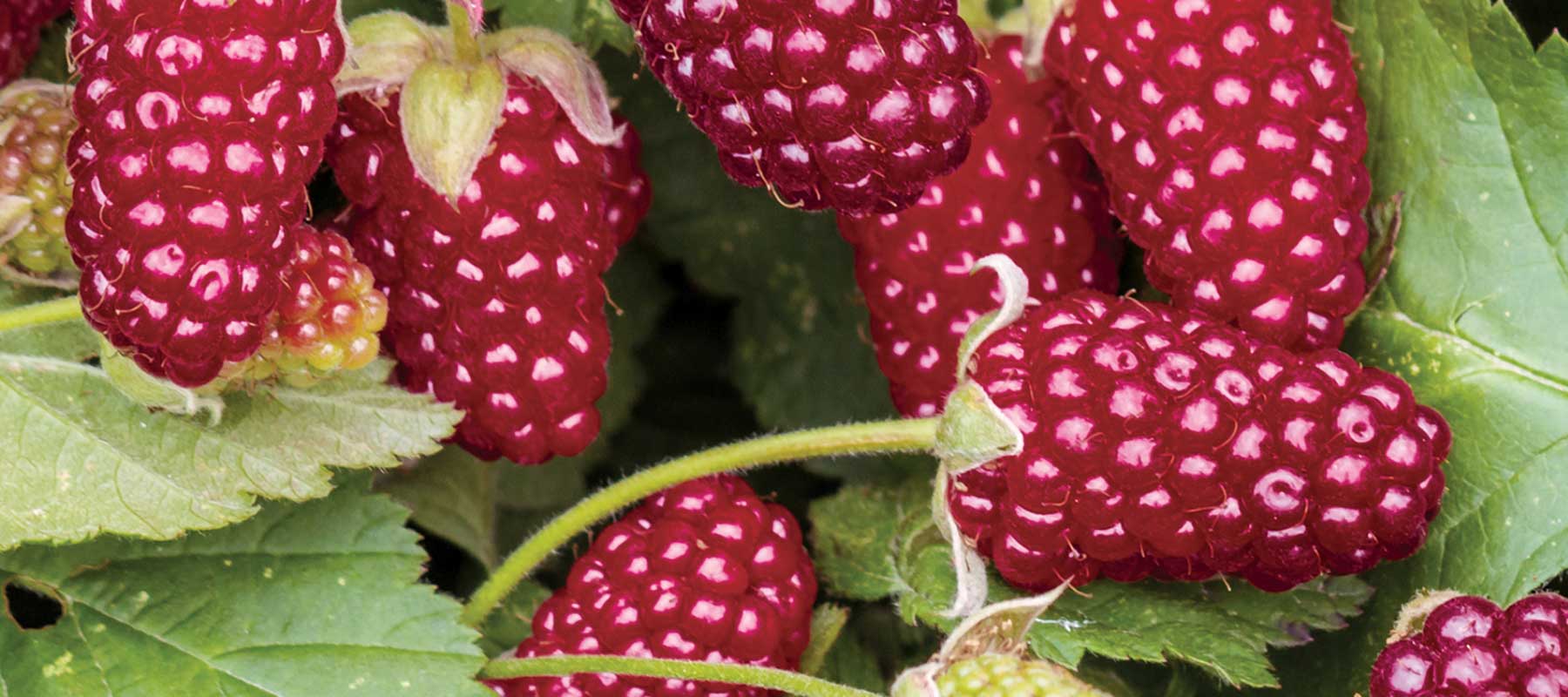
About Loganberries
Loganberry (Rubus × loganobaccus) is a vigorous perennial cane fruit that is a natural cross between a North American blackberry and a European red raspberry. Plants produce elongated, deep wine-red to purple berries that look like an elongated raspberry. Developed by accident in 1881 by James Logan, loganberries offer a rich, tart-sweet flavor that is excellent for fresh eating, jams, jellies, pies, syrups, sauces, freezing, and other preserves.
Loganberries grow long canes that benefit from a trellis, fence, or post-and-wire system. Supporting the canes makes harvesting easier, improves airflow, and helps keep ripe fruit off the ground.
What to do when your Loganberry roots arrive
Bare-root Loganberries may arrive without leaves and can look inactive. This is normal. The plant will begin producing new growth once roots become established and temperatures warm.
Unpack the dormant bare-root plant and inspect the roots. If the roots appear dry, soak them in clean water for approximately 30 minutes before planting.
When to Plant Loganberry Roots
Plant as soon as practical after arrival. If planting must be delayed briefly, keep the roots cool and slightly moist so they do not dry out.
Plant dormant bare-root Loganberry plants in late winter through early spring while the plant is still dormant and the soil can be worked.
In mild-winter climates, dormant plants can also be planted in late fall.
Where to Plant Loganberry Roots
Choose a full sun location that receives at least six to eight hours of direct sunlight each day. Avoid locations where water remains standing after rainfall. Cane fruits need regular moisture but can decline when their roots remain waterlogged. Install a sturdy trellis, fence, or wire support near the planting area as loganberry plants mature to approximately four to six feet tall and produce long canes that require additional horizontal space as well.
This vigorous plant needs room to grow! When planting a row of Loganberries, space plants approximately three feet apart within the row. Allow approximately eight to ten feet between rows to provide room for mature canes, harvesting, pruning, and airflow.
How to Plant Loganberry Roots
Loganberries perform best in deep, fertile yet slightly acidic, well-drained soil. Before planting, loosen the soil and remove perennial weeds, grass, large stones, and other debris. Finished compost can be incorporated into poor soil to improve structure, organic matter, and moisture retention.
Dig a planting hole large enough to hold the roots without bending, circling, or forcing them into a small space. Spread the roots naturally through the planting hole. Position the Loganberry so the crown, where the roots meet the stem, sits approximately one to two inches below the finished soil surface.
Backfill around the roots with soil and gently firm it to remove large air pockets. Water thoroughly immediately after planting. Apply approximately two to three inches of mulch around the root zone to help conserve moisture and suppress weeds, but avoid piling mulch directly against the stems.
How to Care for Loganberries
Keep newly planted Loganberries consistently moist while roots establish, then water deeply when rainfall is insufficient. Consistent moisture is especially important during flowering and fruit development. Mulch around the root zone to help retain moisture.
Wait two to three weeks after planting before applying a balanced or berry fertilizer according to label directions. Established plants can be fertilized in spring, with a light second feeding in early summer if needed. Avoid excess nitrogen, which can encourage leafy growth at the expense of fruit.
Train canes onto a trellis, fence, or wire support. Do not cut your Loganberry to the ground after each season. Loganberries generally fruit on second-year canes, so after harvest, begin by only removing the canes that have fruited at ground level while preserving healthy new canes for next year’s crop. During dormancy, thin to about five strong canes per crown and remove weak, damaged, diseased, or overcrowded growth.
Harvesting Loganberries
Loganberries generally ripen in summer, often from July through August. Harvest when berries turn deep wine-red to reddish purple and release easily from the plant. Pick every few days, handle gently, and enjoy fresh or use for preserves, baking, sauces, juice, or freezing.