
About Pear Trees
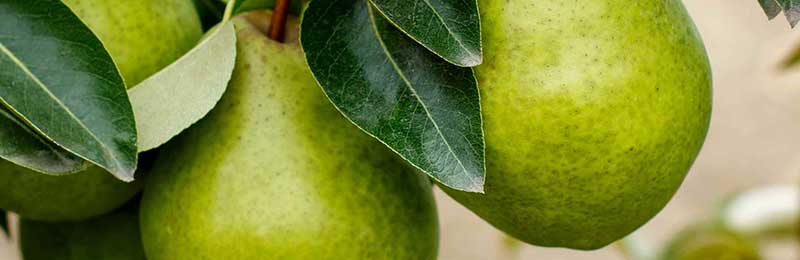
Kieffer is a vigorous, heavy-bearing pear tree valued for its adaptability and dependable production. Large, golden-yellow pears, sometimes with a red blush, ripen in fall and have crisp white flesh with a firm texture. The fruit is excellent for canning, preserves, baking, poaching, and pear butter, and can also be enjoyed fresh when fully mature. White flowers appear in spring, followed by fruit that typically ripens from mid-September through mid-October. Kieffer is notably tolerant of fire blight, although it is not immune.
What to Do When Your Pear Tree Arrives
Open the shipping box promptly and carefully remove the plant and packing materials, handling it by the container or root area rather than the stems. Inspect the plant; minor bent leaves, broken tips, or leaf drop can occur during shipping and are not necessarily signs of poor health.
Pear trees are deciduous and may arrive dormant with bare stems and closed buds from late fall through early spring. During the growing season, they may arrive fully leafed out.
Check the soil before watering. If it feels dry about one inch below the surface, water thoroughly; if moist, allow it to drain and wait to water it again.
Place actively growing plants in a bright, sheltered outdoor location and gradually introduce them to full sun over about one week. Keep dormant plants outdoors in a cool, protected location rather than inside a heated home.
Plant as soon as practical, avoiding frozen or saturated soil. If planting is delayed, keep the roots protected and the soil evenly moist but not waterlogged.
When to Plant Pear Trees
Late winter through early spring is the best time to plant pear trees, once the ground has thawed and the soil is workable. Container-grown trees can be planted later in spring or summer but will require more frequent watering.
Fall planting can work in mild climates if trees have time to establish roots before the ground freezes. In colder regions, spring planting is generally safer. Avoid planting during extreme heat, drought, hard freezes, or when the soil is saturated.
Where to Plant Pear Trees
Choose a location with full sun, ideally receiving at least six to eight hours of direct sunlight daily. Good air circulation and morning sun help foliage dry quickly and reduce disease risk. Plant in well-drained soil, avoiding low areas where water or cold air collects. A gentle slope or slightly elevated site can help protect early spring blossoms from frost.
Allow plenty of space for the mature tree, away from buildings, power lines, paved areas, and other large trees. Keep the area around the trunk free of grass to reduce competition for water and nutrients and prevent mower damage.
How to Plant Pear Trees
Pear trees grow best in deep, fertile, well-drained soil. Remove grass and weeds and prepare a broad planting area rather than improving only the individual hole. The roots will eventually spread well beyond the original nursery container. Dig a hole about twice as wide as the root ball but no deeper.
Carefully remove the tree from its container, supporting the root ball rather than pulling by the trunk. Inspect the roots, gently loosening tightly circling roots and directing them outward. Remove any roots that are broken, severely kinked, or wrapped tightly around the trunk.
Locate the graft union, which usually appears as a swollen, angled, or slightly crooked section near the lower trunk. Do not bury the graft union, instead keep it approximately two to four inches above the finished soil level. Burying the graft can allow the upper variety to form its own roots and eliminate the size control provided by the rootstock. Backfill primarily with the original soil, gently firming it around the roots to eliminate large air pockets.
Water slowly and thoroughly after planting. Apply three to four inches of organic mulch over the root zone, keeping it several inches away from the trunk and graft union.
A young pear tree may benefit from temporary staking, particularly in a windy or exposed location. Place the stake outside the root ball and attach the trunk using a broad, flexible tree tie rather than narrow wire, string, or rigid plastic. Allow a small amount of trunk movement. Gentle movement encourages the trunk to strengthen while the support prevents the root ball from rocking in the ground. Inspect the tie several times each year and loosen it as the trunk expands. Temporary staking can generally be removed after the roots are well established and the tree stands securely.
How to Care for Pear Trees
Check newly planted pear trees weekly during their first growing season and water deeply when the root zone begins to dry. Adjust for rainfall, soil type, temperature, and wind, and do not wait for the leaves to wilt.
Water thoroughly enough to moisten the entire root ball and surrounding soil rather than sprinkling frequently and shallowly. Continue checking the original nursery root ball, as it may dry faster than the surrounding soil during the first season. Established trees tolerate brief dry periods, but consistent moisture is especially important during flowering, fruit set, and fruit development. Avoid keeping the soil saturated; waterlogged roots can be just as damaging as drought.
Newly planted pear trees generally do not need fertilizer during their first year. Allow the tree to establish, and use a soil test to identify any specific nutrient or pH needs. Established trees may benefit from a light application of compost or balanced fruit-tree fertilizer in early spring. Spread fertilizer evenly over the root zone, keeping it away from the trunk.
Prune during late winter or early spring, after the coldest weather has passed but before vigorous growth begins. Begin by removing dead, broken, diseased, crossing, and rubbing branches. Train the tree to a central-leader form, with one dominant upright trunk and several tiers of well-spaced scaffold branches. The finished tree should have a broadly pyramidal shape, with lower branches extending farther than the upper canopy. Choose scaffold branches distributed around the trunk rather than clustered directly above one another.