
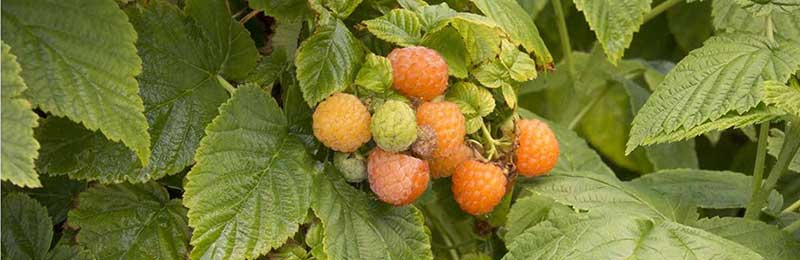
About Raspberry Plants
Raspberries are productive perennial fruit plants that reward gardeners with sweet berries, vigorous growth, and reliable harvests for many years. The fruit can be eaten fresh or used in preserves, baked goods, sauces, smoothies, and frozen desserts.
Raspberries are self-fruitful, so one plant can produce berries without another variety nearby. Planting several raspberries together, however, creates a larger harvest and allows the plants to establish a productive row more quickly. Be sure to read through our entire guide. Knowing how a variety should be pruned is essential to a successful harvest.
What to Do When Your Raspberry Plant Arrives
Open the shipping box promptly and carefully remove the plant and packing materials, handling it by the container or root area rather than the canes. Inspect the plant; minor bent leaves, broken tips, or leaf drop can occur during shipping and are not necessarily signs of poor health.
Raspberries are deciduous, so plants shipped from late fall through early spring may arrive with bare canes, swelling buds, or little foliage. Plants shipped during the growing season may be fully leafed out.
Check the soil before watering. If it feels dry about one inch below the surface, water thoroughly; if moist, allow it to drain and wait to water.
Place actively growing plants in a bright, sheltered outdoor location and gradually introduce them to full sun over about one week. Plant as soon as practical, avoiding frozen or saturated soil. If planting is delayed, keep the roots protected and the soil evenly moist.
When to Plant Raspberry Plants
Plant in spring after the ground has thawed and the soil can be worked but before summer heat arrives. Spring planting gives the roots and crown time to establish before the plant must support vigorous cane growth and fruit development.
Fall planting can also be successful. Plant early enough for the roots to begin establishing before the ground freezes. If the ground begins to freeze it’s not automatically too late to plant. If the soil is still workable, plant immediately and mulch well. If the ground is already frozen and cannot be properly worked, protect the dormant plant in a cold, sheltered location and plant it as soon as the soil becomes workable in spring.
Container-grown plants may be planted during the growing season, but raspberries installed during warm weather require closer attention to watering. Avoid planting during extreme heat, hard freezes, prolonged heavy rain, or periods when the soil is saturated.
Where to Plant Raspberry Plants
Choose a full sun location with fertile, well-drained soil, consistent access to moisture, and good air circulation. Test the soil before planting whenever possible. A soil pH between approximately 5.6 and 6.5 is generally suitable. A soil test can identify pH problems and determine whether lime, sulfur, phosphorus, potassium, or other amendments are needed. Prepare the entire planting row rather than improving only the individual planting hole. Raspberry roots spread outward and require suitable soil beyond the original root ball.
Do not plant raspberries where tomatoes, potatoes, peppers, eggplants, strawberries, or other plants susceptible to Verticillium wilt have recently grown. When possible, choose a site where these crops have not been planted for several years. In addition, avoid areas with strong winds that can break, bend or dry out tall canes. Avoid low areas where water collects after rainfall.
Raspberries spread by producing new shoots from their roots. Choose a location where the planting can gradually form a row without interfering with neighboring beds, pathways, or lawns.
How to Plant Raspberry Plants
Dig a hole about twice as wide as the root ball and no deeper. Remove the plant from its container, gently loosen circling roots, and plant at the same depth it was growing. Backfill with the prepared native soil, firm gently, and water thoroughly. Apply two to three inches of organic mulch over the root zone, keeping it away from the crown and canes.
Growing Raspberries in Containers
Choose a 20 to 30 gallon container at least 18 to 24 inches deep with good drainage and fill with a well-drained, fertile potting mix. Plant at the original depth, place in full sun, and provide sturdy support. Water regularly, thin crowded or weak canes, and protect the container from extreme winter cold in colder climates by moving it to a sheltered, unheated location or insulating the outside of the pot. Roots in containers are exposed to colder temperatures than roots protected by the surrounding ground.
How to Care for Raspberry Plants
Raspberries have relatively shallow roots and require consistent moisture, but do not keep the soil constantly saturated. Established plants generally need approximately one to two inches of water per week from rainfall and irrigation. More may be necessary during hot, dry, or windy weather. Use of a drip system is best to water deeply enough to moisten the soil approximately 6 to 12 inches below the surface. Frequent shallow watering may wet only the mulch and upper soil while leaving much of the root zone dry.
Wait until a newly planted raspberry begins producing healthy growth before fertilizing. Use a balanced garden fertilizer or one formulated for berry plants and follow the label directions carefully.
A trellis keeps raspberry canes upright and contained while improving sunlight exposure, airflow, harvesting access, and fruit quality.
Understanding Raspberry Canes, Pruning and Harvesting
The roots and crown of a raspberry plant are perennial, but each cane can follow a one or two-year life cycle. This difference determines how the plants must be pruned.
A primocane is a first-year cane. It emerges from the crown or roots during spring and is usually green, flexible, and vigorous.
A floricane is a second-year cane. It is the same cane after it survives winter. Floricanes develop browner bark, produce flowers and fruit, and then die.
Everbearing raspberries (also called Fall-bearing) produce their main crop near the upper portions of first-year primocanes from late summer into fall. For one main fall crop, cut all canes to the ground after dormancy or before spring growth begins. New canes will produce fruit in late summer through fall.
For two crops, leave canes standing after the fall harvest. In late winter or early spring, remove only the dead, fruited tips; the remaining canes can produce a smaller summer crop. Remove these canes at ground level after they finish fruiting, leaving new canes for the fall crop.
Junebearing raspberries (also called Summer-bearing or Midseason) grow primocanes during one season, carry them through winter, and produce fruit on those canes as floricanes the following summer. Do not cut all canes to the ground in winter, as this removes the following summer’s crop.
After the summer harvest, cut the canes that produced fruit to the ground, leaving the new green canes for next year. In late winter or early spring, remove damaged or weak canes, thin the remaining healthy canes to about six inches apart, and secure them to the trellis, ready to harvest from them come summer.