
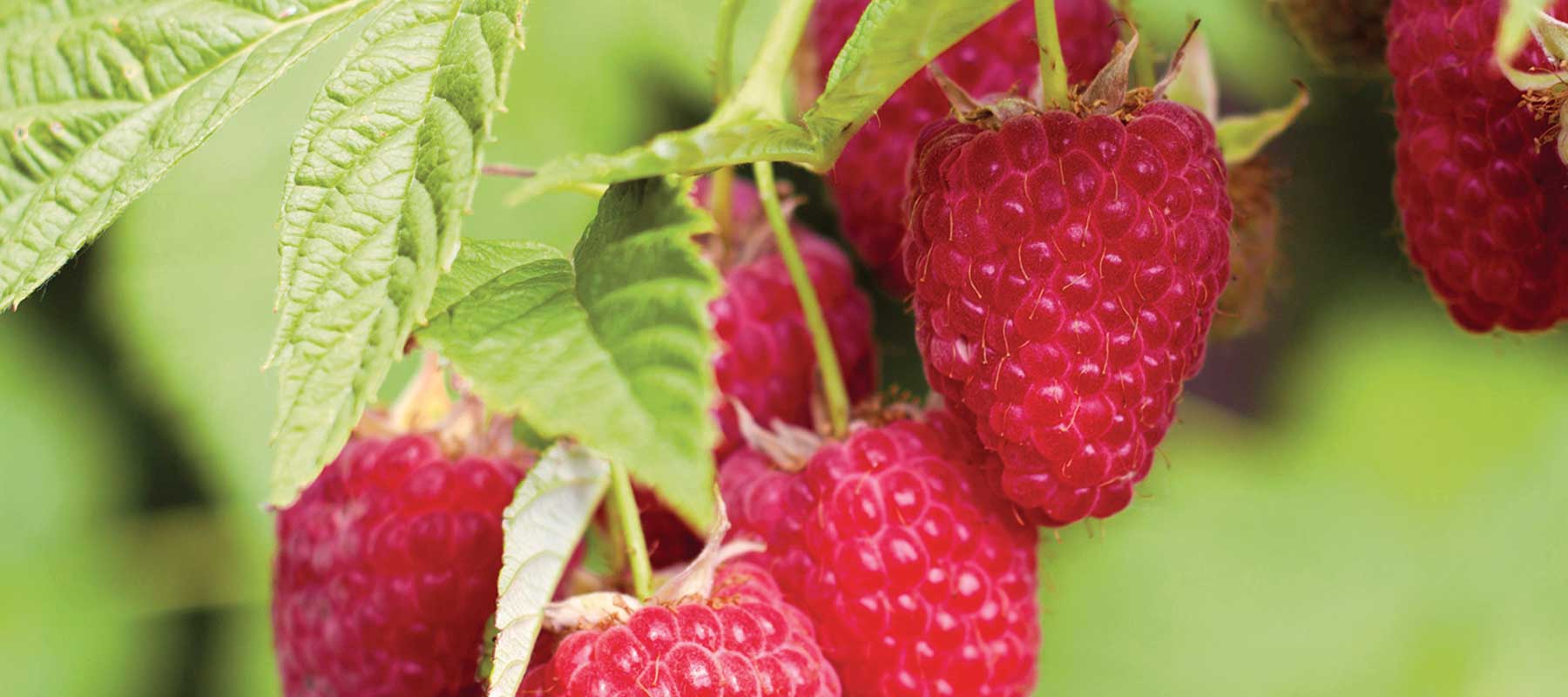
About Raspberries
Few garden treats compare to a sun-warmed raspberry picked straight from the cane. Sweet, juicy, and bursting with bright berry flavor, homegrown raspberries make every harvest feel like a reward. Easy to pick and fun for the whole family, raspberry plants can produce generous harvests year after year, turning a sunny corner of the garden into a delicious summertime tradition.
What to Do When Your Raspberry Roots Arrive
Our raspberry roots arrive dormant or just beginning to emerge from dormancy. This is normal and allows the plants to establish directly in their new growing location.
Open your box promptly and carefully remove your raspberry roots. Your roots will arrive packaged in a bag of soil to help protect them and maintain moisture during shipping. Do not remove the roots from the soil or open the bag until you are ready to plant. Keep the bagged roots cool and moist, and protect them from direct sunlight, heat, and freezing temperatures. Plant as soon as possible once the soil can be worked.
When to Plant Raspberry Roots
Plant raspberry roots in early spring as soon as the soil can be worked. In mild climates, they may also be planted in fall, allowing time for roots to establish before cold weather arrives. Avoid planting when the ground is frozen, waterlogged, or excessively dry. If you cannot plant immediately after arrival, keep the roots cool and moist, but never soaking wet, until you can get them into the ground.
Where to Plant Raspberry Roots
Choose a location in full sun, ideally receiving at least six to eight hours of direct sunlight each day. Raspberries grow best in fertile, well-drained soil with good air circulation. Avoid low-lying areas where water collects, as consistently wet soil can lead to root problems. Allow enough room for plants to spread and for air and sunlight to reach the developing canes. A dedicated row or garden bed makes ongoing pruning and harvesting easier.
How to Plant Raspberry Roots
Before planting, soak bare roots in room-temperature water for about one to two hours to rehydrate them. Dig a hole or trench wide enough to spread the roots naturally without bending or crowding them. Position the plant so the crown, the point where the roots meet the stem, is one to two inches below the soil level. Spread the roots outward, backfill with native soil, and gently firm the soil around them to eliminate large air pockets.
Water thoroughly after planting to settle the soil around the roots. Space plants approximately two to three feet apart within rows, with about six to eight feet between rows. Apply a two- to three-inch layer of mulch around the plants to conserve moisture and suppress weeds, keeping mulch slightly away from the crowns.
Growing Raspberries in Containers
Choose a 20 to 30 gallon container at least 18 to 24 inches deep with good drainage and fill with a well-drained, fertile potting mix. Plant the crown of the roots one to two inches below the soil surface, place in full sun, and provide sturdy support. Water regularly, thin crowded or weak canes, and protect the container from extreme winter cold in colder climates by moving it to a sheltered, unheated location or insulating the outside of the pot. Roots in containers are exposed to colder temperatures than roots protected by the surrounding ground.
How to Care for Raspberries
Raspberries have relatively shallow roots and require consistent moisture, but do not keep the soil constantly saturated. Established plants generally need approximately one to two inches of water per week from rainfall and irrigation. More may be necessary during hot, dry, or windy weather. Use of a drip system is best to water slowly and deeply enough to moisten the soil approximately 6 to 12 inches below the surface. Frequent shallow watering may wet only the mulch and upper soil while leaving much of the root zone dry.
Wait until a newly planted raspberry begins producing healthy growth before fertilizing. Use a balanced garden fertilizer or one formulated for berry plants and follow the label directions carefully.
A trellis keeps raspberry canes upright and contained while improving sunlight exposure, airflow, harvesting access, and fruit quality.
Understanding Raspberry Canes, Pruning and Harvesting
The roots and crown of a raspberry plant are perennial, but each cane follows a two-year life cycle.
A primocane is a first-year cane. It emerges from the crown or roots during spring and is usually green, flexible, and vigorous.
A floricane is a second-year cane. It is the same cane after it survives winter. Floricanes develop browner bark, produce flowers and fruit, and then die.
Everbearing raspberries (also called fall-bearing) produce their main crop near the upper portions of first-year primocanes from late summer into fall. For one main fall crop, cut all canes to the ground after dormancy or before spring growth begins. New canes will produce fruit in late summer through fall.
For two crops, leave canes standing after the fall harvest. In late winter or early spring, remove only the dead, fruited tips; the remaining canes can produce a smaller summer crop. Remove these canes at ground level after they finish fruiting, leaving new canes for the fall crop.
Junebearing raspberries (also called summer-bearing or midseason) grow primocanes during one season, carry them through winter, and produce fruit on those canes as floricanes the following summer. Do not cut all canes to the ground in winter, as this removes the following summer’s crop.
After the summer harvest, cut the canes that produced fruit to the ground, leaving the new green canes for next year. In late winter or early spring, remove damaged or weak canes, thin the remaining healthy canes to about six inches apart, and secure them to the trellis, ready to harvest from them come summer.
| Variety | Plant Type | Fruiting Type | Harvest/Pruning |
| Heritage | Everbearing | Primocane: Fruits on first-year canes. | For one fall crop: cut all canes down to the ground during dormancy. Can produce two crops when managed for both: a summer crop on second-year floricanes and a larger late-summer/fall crop on first-year primocanes |
| Fall Gold | Everbearing | Primocane: Fruits on first-year canes. | For one fall crop: cut all canes down to the ground during dormancy. Can produce two crops when managed for both: a summer crop on second-year floricanes and a larger late-summer/fall crop on first-year primocanes |
| Nova | Junebearing | Floricane: Fruits on second-year canes. | Remove all floricanes that produced fruit, while the new primocanes are retained for next year’s crop. |
| Anne | Everbearing | Primocane: Fruits on first-year canes. | For one fall crop: cut all canes down to the ground during dormancy. Can produce two crops when managed for both: a summer crop on second-year floricanes and a larger late-summer/fall crop on first-year primocanes |
| Latham | Junebearing | Floricane: Fruits on second-year canes. | Remove all floricanes that produced fruit, while the new primocanes are retained for next year’s crop. |
| Jewel | Midseason | Floricane: Fruits on second-year canes. | Remove all floricanes that produced fruit, while the new primocanes are retained for next year’s crop. |