
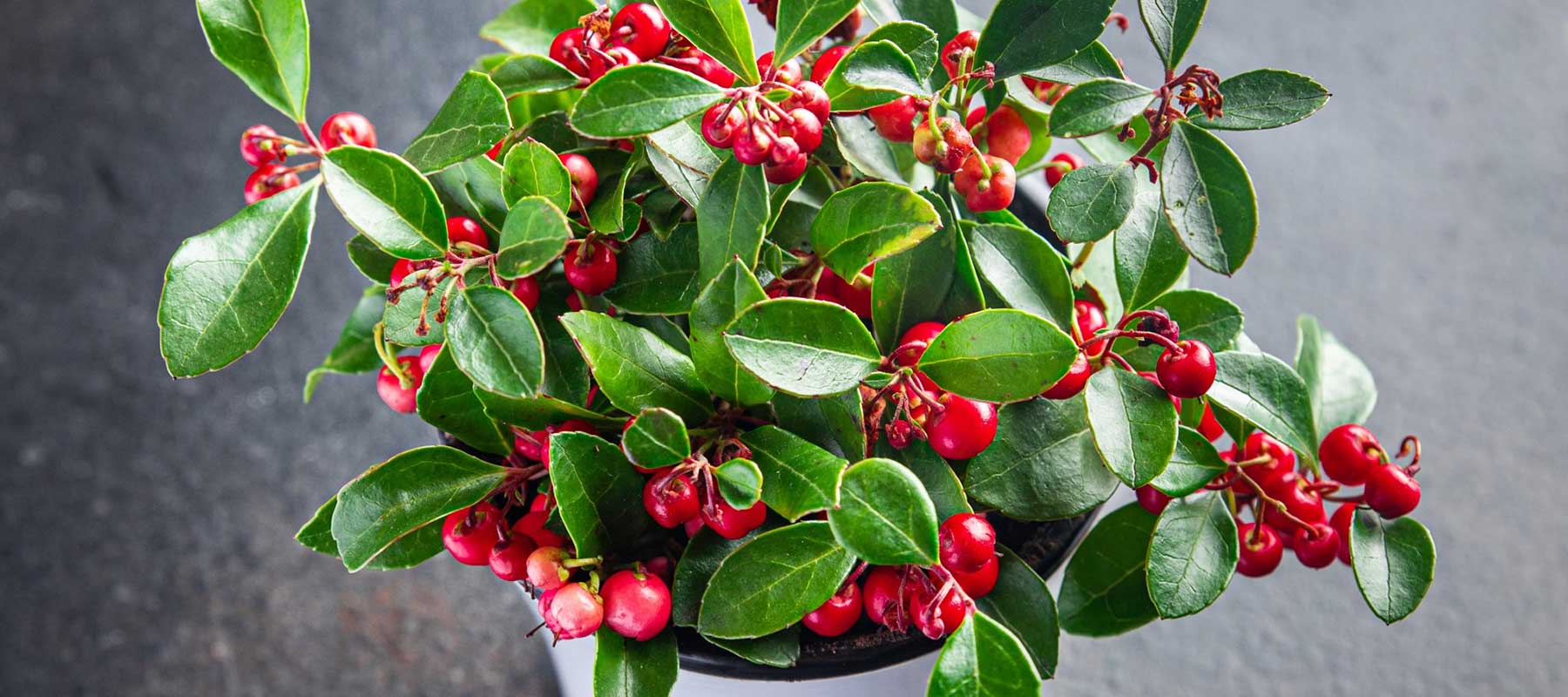
About Wintergreen Trees
American Wintergreen is a charming, low-growing evergreen native to North America, prized for its glossy green foliage, bright red berries, and refreshing wintergreen fragrance. This slow-spreading perennial makes a beautiful groundcover, bringing year-round interest to shaded garden spaces. Your American Wintergreen can remain in its original pot, be moved into a larger container, or be transplanted directly into the garden. If you live within USDA Zones 3 through 9 and would like to give your plant a permanent home in the landscape, follow these simple planting and care instructions to help it thrive.
When to Plant Wintergreen Trees
Plant American Wintergreen in early spring after the ground has thawed and can be worked, or in early fall when temperatures begin to cool. Spring planting gives the roots time to establish before summer heat arrives, while fall planting allows them to settle in before winter. Avoid planting during periods of extreme heat, drought, or when the ground is frozen.
Where to Plant Wintergreen Trees
Choose a location in partial to full shade, ideally beneath trees or in a woodland garden where the soil stays cool and consistently moist. American Wintergreen thrives in acidic, well-drained soil with a pH between 4.5 and 6.0. Test your soil before planting and amend it if necessary. Incorporating peat moss or composted pine bark can help improve soil structure and create favorable growing conditions.
American Wintergreen is an excellent choice for shaded borders, woodland pathways, and naturalized areas. It also grows beautifully in containers filled with an acidic potting mix formulated for plants such as azaleas or camellias. Choose a container with drainage holes and place it in a cool, partially shaded location.
How to Plant Wintergreen Trees
Dig a hole approximately twice as wide as the root ball and the same depth. Carefully remove the plant from its container, gently loosen any tightly packed roots, and position it so the crown sits level with the surrounding soil. Backfill with soil, gently firming it around the roots to eliminate large air pockets.
Space plants approximately 12 to 18 inches apart to allow room for their slow, spreading growth. Water thoroughly after planting to settle the soil around the roots. Apply a two- to three-inch layer of pine needles or shredded bark to help retain moisture, regulate soil temperature, and suppress weeds. Keep mulch slightly away from the crown of each plant.
How to Care for Wintergreen Trees
Keep the soil consistently moist, but never waterlogged, during the first growing season while your American Wintergreen becomes established. Check soil moisture regularly and water deeply whenever the upper layer begins to dry. Established plants require less frequent watering but still appreciate evenly moist soil, particularly during hot or dry weather.
In spring, apply a fertilizer formulated for acid-loving plants, such as azaleas, at half the recommended strength if additional nutrients are needed. Maintain a layer of mulch around the plants to help keep their shallow roots cool and moist. Pruning is rarely necessary, although you can trim spreading runners to keep plants within their desired boundaries.
American Wintergreen produces delicate, bell-shaped flowers that attract pollinators, followed by bright red berries that typically ripen in late fall and may persist through winter. Plants are self-fertile, but growing several together can create a fuller groundcover and encourage more abundant berry production. The edible berries can be harvested when ripe, while the aromatic leaves can be gathered throughout the year.