About Chives
Chives are hardy, perennial herbs in the onion family, loved for their mild, onion-like flavor and pretty purple blooms. They’re perfect for seasoning salads, eggs, soups, and more and their flowers attract pollinators to the garden. Once established, chives come back year after year and can even be grown indoors on a sunny windowsill.
When to Plant Chives Seeds
When sowing outdoors, wait until after the threat of frost has passed in the spring, and the soil temperature is at least 60°F. If growing indoors, Chives can be started six to eight weeks before your last expected frost date. Chives germinate best with steady warmth and consistent moisture.
Where to Plant Chives Seeds
Chives do best when they receive exposure to full sun conditions. When planting outdoors, choose fertile, loamy soil, but you don’t want to over-fertilize, which will result in your chives having a milder flavor. Ideal soil pH is 6.0 to 7.0. Make sure the soil is well-draining whether you plant in garden beds, borders, raised beds, or containers. If planting in a container, use a pot that is at least six inches deep.
How to Plant Chives Seeds
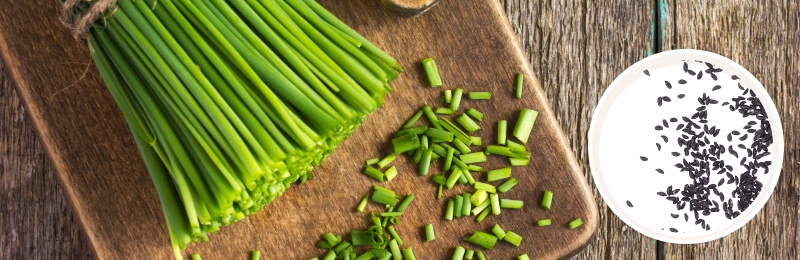
Plant in rows with groups of seeds about every four inches. Prepare the soil by loosening it and mixing in compost. Press seeds into soil but do not cover with more than ¼ inch of soil, as chives seeds require sunlight to grow. Keep soil evenly moist during germination, not allowing it to dry out.
Once seedlings are two to three inches tall, thin to one plant every six to nine inches.
If your seeds were sown indoors, place your container in a sunny location (or under grow lights) that gets consistent temperatures of 60°F to 70°F. Expect germination in 10 to 14 days.
How to Harvest Chives
Once Chives are from 6 to 12 inches tall, simply snip off what you need. Cut leaves from the base of the plant using scissors, leaving at least two inches to allow regrowth. Regular harvesting encourages new fresh and tender shoots. You can cut chives down to about half of their height without causing any harm to the plant itself. When your chive plant starts to flower in late spring to early summer, the flowers can be eaten as well! Snip the flowers off to keep the leaves flavorful and enjoy the blossoms as edible garnishes.
Every two to three years, divide plant clumps and replant them to keep growth vigorous.